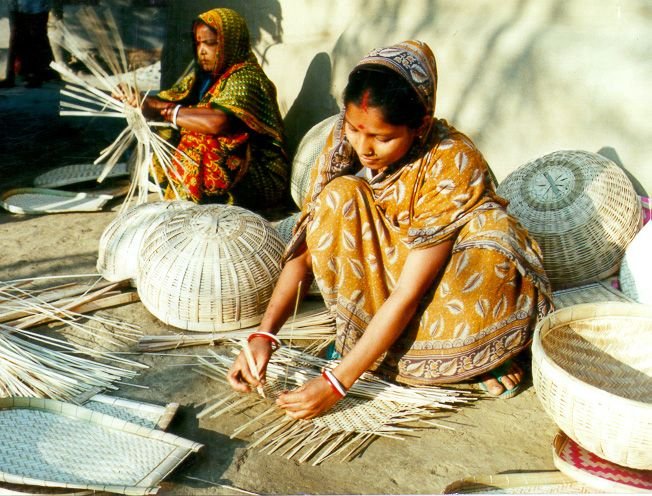
In the quiet villages of West Bengal, where the rhythm of life once moved in harmony with nature, bamboo was never just a plant—it was a way of life. From the first light of dawn to the soft glow of evening lamps, the sound of bamboo being split, shaped, and woven carried stories across generations.
Bamboo handicrafts here are not merely products. They are memories, traditions, and identities—passed down from fathers to sons, mothers to daughters. Each basket, each mat, each intricately designed piece carries within it the patience of skilled hands and the wisdom of centuries.
But today, these stories are slowly fading.
A Life Rooted in Tradition:
For many artisans in rural Bengal, bamboo work is not a profession they chose—it is a legacy they inherited. Sitting on mud floors, surrounded by strips of freshly cut bamboo, artisans spend hours crafting items that are both functional and beautiful. Their hands move with a rhythm that no machine can replicate.
Yet, despite their unmatched craftsmanship, their lives remain painfully simple. Small huts, uncertain incomes, and a constant struggle to make ends meet define their daily existence. Festivals come and go, but prosperity rarely knocks on their doors.
The Silent Struggle:
The tragedy is not in the lack of skill—it is in the lack of opportunity. In a world driven by digital marketplaces, branding, and global trade, these artisans remain disconnected. They do not know how to market their products, how to reach buyers beyond local haats (markets), or how to price their work fairly. Middlemen often exploit them, paying a fraction of what their art truly deserves.
As cheaper, factory-made alternatives flood the market, the demand for handmade bamboo products declines. What once held cultural pride is now seen as outdated by many urban consumers.
When Tradition Meets Survival:
The most heart-breaking reality is this: many artisans are abandoning their craft. Not because they want to, but because they have to. To feed their families, they migrate to cities, take up daily wage labour, or shift to other low-paying jobs. The bamboo tools gather dust, and with them, generations of knowledge begin to disappear.
A father who once dreamed of passing his skill to his child now encourages them to seek a different path—one that promises stability, even if it means losing a piece of their identity.
A Culture at Risk:
If this continues, bamboo handicrafts of West Bengal may not vanish overnight—but they will slowly lose their essence. What will remain might be commercial replicas, stripped of the soul that only a true artisan can give. This is not just an economic issue. It is a cultural loss.
A Hopeful Tomorrow:
Despite the challenges, hope still exists. With the right support—digital platforms, fair trade practices, government initiatives, and conscious consumers—these artisans can reclaim their dignity. Teaching them how to sell online, connecting them directly with buyers, and valuing handmade products can transform their lives.
Every purchase of a handcrafted bamboo product is not just a transaction—it is a step toward preserving a tradition, supporting a family, and keeping a story alive.
Final Thoughts:
The bamboo artisans of West Bengal do not seek sympathy. They seek opportunity. Their hands still remember the art. Their hearts still carry the passion. All they need is a bridge between their world and ours.
Because when we lose such traditions, we don’t just lose products—we lose pieces of humanity itself.